
[et_pb_section fb_built=”1″ _builder_version=”4.27.4″ _module_preset=”default” global_colors_info=”{}”][et_pb_row column_structure=”3_4,1_4″ _builder_version=”4.27.4″ _module_preset=”default” global_colors_info=”{}”][et_pb_column type=”3_4″ _builder_version=”4.27.4″ _module_preset=”default” global_colors_info=”{}”][et_pb_text _builder_version=”4.27.4″ _module_preset=”default” custom_padding=”20px||||false|false” global_colors_info=”{}”]
Dr. Ben D. Sawyer is an applied neuroscientist and human factors engineer optimizing the exchange of information between machine and human. He directs The Readability Consortium, where teams backed by Google, Adobe, and Monotype are reengineering the technology of the written word for billions of readers worldwide. His Evil Digital Twin research series at Black Hat draws standing-room audiences exploring AI exploitation of human psychology. He chairs the Board of the Cognitive Security Institute. His work has been covered by The Washington Post, The New York Times, Forbes, Wired, Fast Company, The BBC, and more…
[/et_pb_text][/et_pb_column][et_pb_column type=”1_4″ _builder_version=”4.27.4″ _module_preset=”default” global_colors_info=”{}”][et_pb_image src=”https://www.bendsawyer.com/wp-content/uploads/2026/03/BenDSawyer_Juicer.png” title_text=”BenDSawyer_Juicer” _builder_version=”4.27.6″ _module_preset=”default” hover_enabled=”0″ global_colors_info=”{}” sticky_enabled=”0″][/et_pb_image][/et_pb_column][/et_pb_row][et_pb_row _builder_version=”4.27.4″ _module_preset=”default” global_colors_info=”{}”][et_pb_column type=”4_4″ _builder_version=”4.27.4″ _module_preset=”default” global_colors_info=”{}”][et_pb_text _builder_version=”4.27.6″ _module_preset=”default” global_colors_info=”{}”]
Featured Research: Modeling Manipulation of Humans by AI
[/et_pb_text][/et_pb_column][/et_pb_row][et_pb_row column_structure=”1_2,1_2″ _builder_version=”4.27.4″ _module_preset=”default” global_colors_info=”{}”][et_pb_column type=”1_2″ _builder_version=”4.27.4″ _module_preset=”default” global_colors_info=”{}”][et_pb_video src=”https://www.youtube.com/watch?v=XOMJcT-DrlY” _builder_version=”4.27.4″ _module_preset=”default” global_colors_info=”{}”][/et_pb_video][/et_pb_column][et_pb_column type=”1_2″ _builder_version=”4.27.4″ _module_preset=”default” global_colors_info=”{}”][et_pb_text _builder_version=”4.27.4″ _module_preset=”default” global_colors_info=”{}”]
Dr. Sawyer is researching how Human Digital Twin (HDT) technologies manipulate humans to achieve goals.
Over 20,000 have viewed his Evil Digital Twin talk series, a Blackhat favorite helping security professionals predict the future, plan for the complex present, and see beyond…
[/et_pb_text][et_pb_button button_url=”https://www.evildigitaltwin.ai” url_new_window=”on” button_text=”Visit Evil Digital Twin” button_alignment=”center” _builder_version=”4.27.4″ _module_preset=”default” global_colors_info=”{}”][/et_pb_button][/et_pb_column][/et_pb_row][/et_pb_section][et_pb_section fb_built=”1″ _builder_version=”4.27.4″ _module_preset=”default” global_colors_info=”{}”][et_pb_row _builder_version=”4.27.4″ _module_preset=”default” global_colors_info=”{}”][et_pb_column type=”4_4″ _builder_version=”4.27.4″ _module_preset=”default” global_colors_info=”{}”][et_pb_text _builder_version=”4.27.4″ _module_preset=”default” global_colors_info=”{}”]
Featured Peer-reviewed Works
[/et_pb_text][/et_pb_column][/et_pb_row][et_pb_row column_structure=”1_3,1_3,1_3″ _builder_version=”4.27.4″ _module_preset=”default” global_colors_info=”{}”][et_pb_column type=”1_3″ _builder_version=”4.27.4″ _module_preset=”default” global_colors_info=”{}”][et_pb_image src=”https://www.bendsawyer.com/wp-content/uploads/2026/03/Toward-a-theory-of-visual-information-acquisition-in-driving.png” alt=”image of a man using a driving simulator” title_text=”Toward a theory of visual information acquisition in driving” _builder_version=”4.27.4″ _module_preset=”default” global_colors_info=”{}”][/et_pb_image][et_pb_text _builder_version=”4.27.4″ _module_preset=”default” header_3_font_size=”20px” global_colors_info=”{}”]
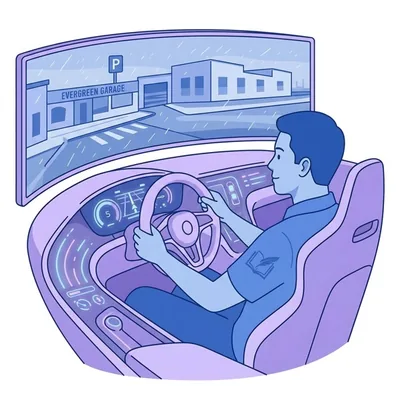
Toward a theory of visual information acquisition in driving
The aim of this study is to describe information acquisition theory, explaining how drivers acquire and represent the information they need…
[/et_pb_text][et_pb_button button_url=”/project/toward-a-theory-of-visual-information-acquisition-in-driving” button_text=”Read More” button_alignment=”center” _builder_version=”4.27.4″ _module_preset=”default” global_colors_info=”{}”][/et_pb_button][/et_pb_column][et_pb_column type=”1_3″ _builder_version=”4.27.4″ _module_preset=”default” global_colors_info=”{}”][et_pb_image src=”https://www.bendsawyer.com/wp-content/uploads/2026/03/Grand-challenges-for-human-factors-and-ergonomics-1.png” title_text=”Grand challenges for human factors and ergonomics” _builder_version=”4.27.6″ _module_preset=”default” global_colors_info=”{}”][/et_pb_image][et_pb_text _builder_version=”4.27.4″ _module_preset=”default” header_3_font_size=”20px” global_colors_info=”{}”]
Grand challenges for human factors and ergonomics
Human Factors and Ergonomics (HFE) has been evolving since its inception as a unique and independent discipline that focuses on the nature of human–artifact interactions,…
[/et_pb_text][et_pb_button button_url=”/project/grand-challenges-for-human-factors-and-ergonomics” button_text=”Read More” button_alignment=”center” _builder_version=”4.27.4″ _module_preset=”default” global_colors_info=”{}”][/et_pb_button][/et_pb_column][et_pb_column type=”1_3″ _builder_version=”4.27.4″ _module_preset=”default” global_colors_info=”{}”][et_pb_image src=”https://www.bendsawyer.com/wp-content/uploads/2026/03/Hacking-the-human-the-prevalence-paradox.png” alt=”illustration of student using laptop” title_text=”Hacking the human, the prevalence paradox” _builder_version=”4.27.6″ _module_preset=”default” transform_scale_linked=”off” global_colors_info=”{}”][/et_pb_image][et_pb_text _builder_version=”4.27.4″ _module_preset=”default” header_3_font_size=”20px” global_colors_info=”{}”]
Hacking the Human: The Prevalence Paradox
Winner of the Human Factors Prize. When operators struggle to act in highly automated systems due to the biological failures of The Vigilance Effect, the human is bypassed, leaving the machine in charge…
[/et_pb_text][et_pb_button button_url=”https://www.bendsawyer.com/wp-content/uploads/2025/05/Sawyer-and-Hancock_2018_Hacking-the-Human.pdf” button_text=”Read More” button_alignment=”center” _builder_version=”4.27.6″ _module_preset=”default” global_colors_info=”{}”][/et_pb_button][/et_pb_column][/et_pb_row][/et_pb_section]